What Stays and What Goes When an Old House Comes Down in Redding
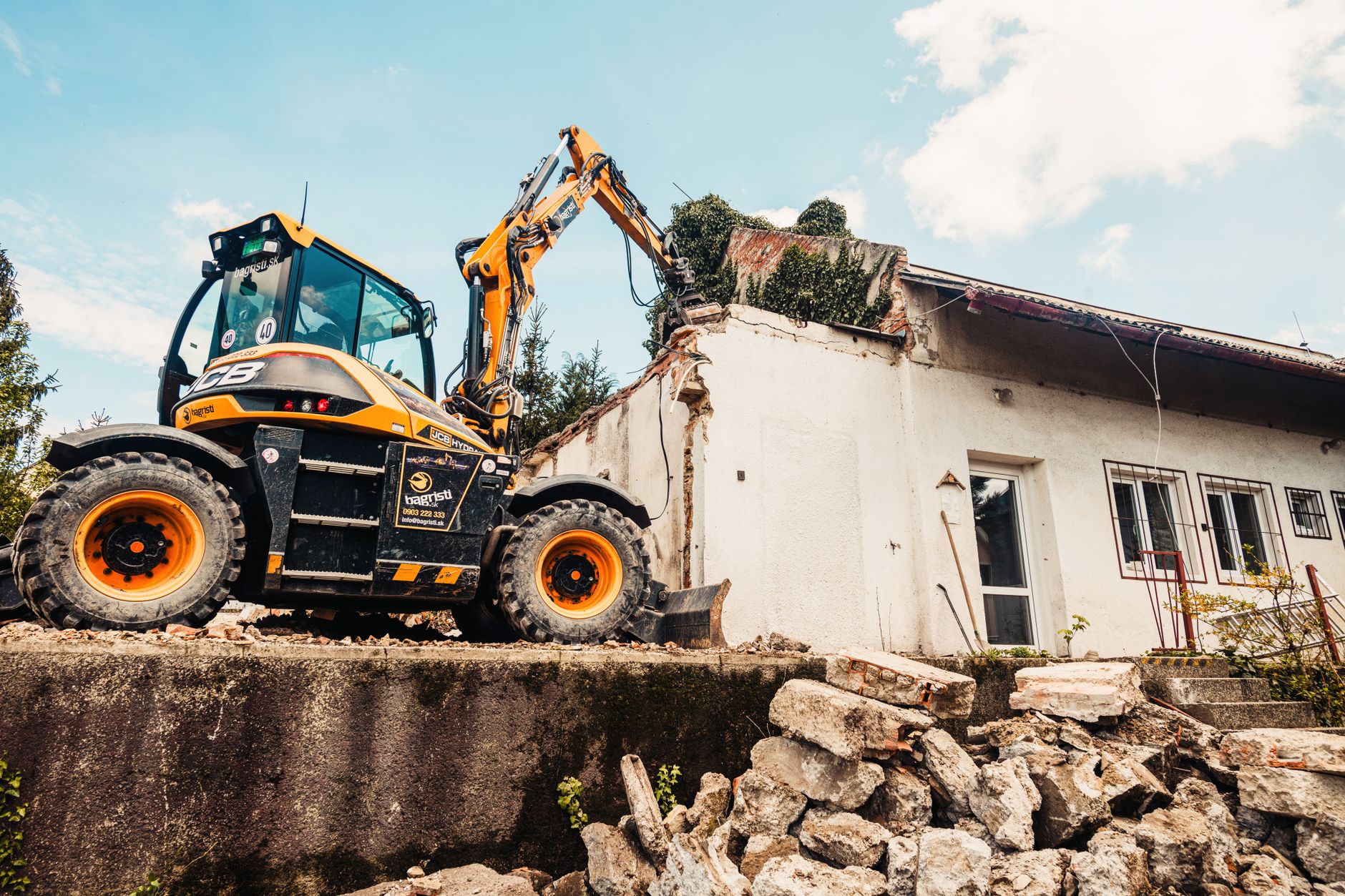
A teardown clears more than the house, and the questions that matter most are usually about everything around it. People ask what happens to the slab, whether the oak by the driveway survives, who handles the old septic tank, and what is buried in the yard that nobody remembers. The answers below come from the way whole-house teardowns are done on Redding lots, from older neighborhoods near Shasta College out to the acreage around Palo Cedro.
Is the foundation always removed with the house?
The foundation is removed unless the new plans reuse it, and that decision is written into the permit. A slab on grade is broken with a breaker on an excavator and loaded in pieces. A raised foundation has a perimeter footing and short stem walls, and those are pulled out the same way. Leaving a footing in place is allowed only when the new design says so, and the inspector marks it on the record.
Concrete is hauled clean to a recycler when it has no wood or dirt mixed in. Rebar is cut free and stacked for the scrap yard. A foundation that is full of dirt, trash or old asphalt tile gets sorted differently, so the crew keeps loads separate from the start.
What happens to trees and landscaping near the house?
Trees near the structure are flagged before the equipment arrives, and the ones that stay get a protection zone. An excavator swings a wide arc, and a boom that clips an oak limb can do damage that takes years to show. The root zone is the real concern: a heavy truck parked over it compacts the soil, so the haul route is planned to stay clear.
Some trees come out with the house, either because the new plans need the space or because they are too close to be saved. Large trees and oaks can be protected by local rules, so the question gets answered with the city or Shasta County before anyone cuts.
- Mark the trees that must stay with tape or paint before the crew arrives.
- Keep trucks and stockpiles outside the drip line.
- Ask about permits for any large tree that is going.
Who deals with an old septic tank or a buried propane tank?
A licensed septic contractor pumps and decommissions the septic tank, not the demolition crew. The tank is pumped empty, then it is either crushed in place and filled with gravel or lifted out whole, and the leach field is left undisturbed so the lot can still be built on. The record of what was done goes to the county health office.
A buried propane tank is a different problem because nobody has to report one. Rural parcels often hold a tank that was installed decades ago and forgotten. The supplier pumps it out and hauls it, and the crew probes the yard with a rod before any digging starts. Finding one with a bucket tooth is a bad day for everybody.
Are fences, sheds and driveways part of the teardown?
Fences, sheds and driveways are in the job only if the permit and the contract name them. A detached garage and a covered patio count as structures and go on the permit sheet. A driveway can stay as a staging area and haul route, then come out last. A fence on the property line is usually left alone because it may belong to the neighbor.
A shared fence is worth a conversation before the work, since a boom reaching over it can pull posts loose. Many crews photograph the fence before and after, so there is a record of what condition it was in.
What is under the yard that might surprise the crew?
The yard hides more than most owners expect. Buried irrigation lines, old drain pipes, a dry well, a forgotten cistern, an abandoned fuel tank, a burn pit full of glass and metal. On older Redding lots the original house may have been replaced or added to more than once, and each version left something behind.
Calling the underground locating service before digging marks the public lines. Private lines, like the one running from the house to a detached shop, do not get marked, so the crew relies on probing, on old plans and on what the owner remembers. When something unexpected turns up, work stops at that spot until it is identified.
How is dust kept out of the neighborhood?
Dust is controlled with water, applied continuously from the first cut to the last load. A hose line or a misting cannon wets the structure before it is touched, and the operator sprays as each section drops. The water has to be arranged ahead of time through a hydrant meter or a tank on a trailer.
The dust plan matters most on old houses, where plaster, drywall and paint chips go airborne at the first impact. Wind off the hills near Whiskeytown Lake can shift a plume across a property line in a minute, and a gusty afternoon stops the work for the day. Neighbors are told the dates, and the crew keeps the street swept.
What happens to the debris once it leaves the lot?
The debris is sorted at the site and hauled in separate loads. Clean concrete goes to a crusher, metal goes to a scrap yard, clean wood goes to a chipper or a transfer station, and everything else goes to the landfill. Materials that tested positive for asbestos or lead paint follow their own handling and go only to facilities that accept them.
A single story house usually fills somewhere between eight and fifteen truck loads, depending on whether it has a slab, a crawlspace and a detached garage. Trucks are weighed going in, the tickets are kept, and the haul route stays off the downtown streets near the Cascade Theatre and the Sundial Bridge, using Interstate 5 to reach the transfer station instead.
What condition is the lot in when the job is done?
The lot is left graded, raked and clear of debris, with the erosion controls in place until the inspector releases them. Open voids from a basement, a pool or a septic tank are filled and compacted in lifts so the ground will carry a new foundation. A magnet sweep picks up nails and screws that would otherwise puncture tires.
Photographs, weight tickets, survey reports and the cap records for each utility go into the file. That file is what a builder, a lender or a title company asks for later.
Should a homeowner expect anything to be left that was not planned?
Something is almost always left that was not planned, and the best defense is a walkthrough with the foreman before the work starts. Walk the lot, point out every item that stays, and get the list written down. The common leftovers are a chimney base, a section of footing under a retaining wall, and a few feet of old pipe.
A short walkthrough at the end of the job catches the rest, before the equipment leaves the site.